Portal:Cities

The Cities Portal

A city is a human settlement of a substantial size. The term "city" has different meanings around the world and in some places the settlement can be very small. Even where the term is limited to larger settlements, there is no universally agreed definition of the lower boundary for their size. In a narrower sense, a city can be defined as a permanent and densely populated place with administratively defined boundaries whose members work primarily on non-agricultural tasks. Cities generally have extensive systems for housing, transportation, sanitation, utilities, land use, production of goods, and communication. Their density facilitates interaction between people, government organizations, and businesses, sometimes benefiting different parties in the process, such as improving the efficiency of goods and service distribution.
Historically, city dwellers have been a small proportion of humanity overall, but following two centuries of unprecedented and rapid urbanization, more than half of the world population now lives in cities, which has had profound consequences for global sustainability. Present-day cities usually form the core of larger metropolitan areas and urban areas—creating numerous commuters traveling toward city centres for employment, entertainment, and education. However, in a world of intensifying globalization, all cities are to varying degrees also connected globally beyond these regions. This increased influence means that cities also have significant influences on global issues, such as sustainable development, climate change, and global health. Because of these major influences on global issues, the international community has prioritized investment in sustainable cities through Sustainable Development Goal 11. Due to the efficiency of transportation and the smaller land consumption, dense cities hold the potential to have a smaller ecological footprint per inhabitant than more sparsely populated areas. Therefore, compact cities are often referred to as a crucial element in fighting climate change. However, this concentration can also have some significant harmful effects, such as forming urban heat islands, concentrating pollution, and stressing water supplies and other resources. (Full article...)
Selected city -
.jpg)
Valletta (/vəˈlɛtʌ/ ⓘ; Maltese: il-Belt Valletta, pronounced [ɪlˈbɛlt vɐˈlːɛtːɐ]) is the capital city of Malta and one of its 68 council areas. Located between the Grand Harbour to the east and Marsamxett Harbour to the west, its population as of 2021 was 5,157. As Malta’s capital city, it is a commercial centre for shopping, bars, dining, and café life. It is also the southernmost capital of Europe, and at just 0.61 square kilometres (0.24 sq mi), it is the European Union's smallest capital city.
Valletta's 16th-century buildings were constructed by the Knights Hospitaller. The city was named after the Frenchman Jean Parisot de Valette, who succeeded in defending the island against an Ottoman invasion during the Great Siege of Malta. The city is Baroque in character, with elements of Mannerist, Neo-Classical and Modern architecture, though the Second World War left major scars on the city, particularly the destruction of the Royal Opera House. The city was officially recognised as a World Heritage Site by UNESCO in 1980. The city has 320 monuments, all within an area of 0.55 square kilometres (0.21 sq mi), making it one of the most concentrated historic areas in the world. Sometimes called an "open-air museum", Valletta was chosen as the European Capital of Culture for 2018. Valletta was also listed as the sunniest city in Europe in 2016. (Full article...)
Did you know -
- ... that the Midtown Theater was nowhere near Midtown?
- ... that a Kansas City TV station was under contract to be sold within a week of its first regular broadcast?
- ... that Huntsville, Alabama, is nicknamed Rocket City?
- ... that a school in New York City occupies a Renaissance-style palazzo and a "French Renaissance hotel"?
- ... that the New York City Board of Estimate voted to demolish Fort Clinton six times before the fort became a U.S. national monument?
- ... that 17 State Street, near the southern end of New York City's Manhattan Island, was described as "quite literally a beacon for Lower Manhattan"?
Related portals





Related WikiProjects

- WikiProject Cities
- WikiProject Countries
- WikiProject Geography
 Recognized content -

Elcor is a ghost town, or more properly, an extinct town, in the U.S. state of Minnesota that was inhabited between 1897 and 1956. It was built on the Mesabi Iron Range near the city of Gilbert in St. Louis County. Elcor was its own unincorporated community before it was abandoned and was never a neighborhood proper of the city of Gilbert. Not rating a figure in the national census, the people of Elcor were only generally considered to be citizens of Gilbert. The area where Elcor was located was annexed by Gilbert when its existing city boundaries were expanded after 1969.
In November 1890, the seven Merritt brothers discovered ore near Mountain Iron, triggering an unparalleled iron rush to the Mesabi Range. The Elba mine was opened in 1897, and the town was platted under the direction of Don H. Bacon, president of the Minnesota Iron Company. A second nearby mine, the Corsica, was opened in 1901. The community was first called "Elba" after the name of the first underground mine (the name "Elcor" was formed later by combining the first syllables of each mine's name). The Elba and Corsica mines were both leased by Pickands Mather and Company after the formation of the United States Steel Corporation. An influx of people of many ethnicities and many nations followed, and Elcor became a microcosm of U.S. immigration, mirroring the cultural assimilation of the time. At its peak around 1920, Elcor had two churches, a post office, a general store, a primary school, a railroad station, and its own law enforcement, and housed a population of nearly 1,000. (Full article...)
Selected article -

A sustainable city, eco-city, or green city is a city designed with consideration for the social, economic, and environmental impact (commonly referred to as the triple bottom line), as well as a resilient habitat for existing populations. The UN Sustainable Development Goal 11 defines as one that is dedicated to achieving green, social, and economic sustainability, facilitating opportunities that prioritize inclusivity as well as maintaining a sustainable economic growth. Furthermore, the objective is to minimize the inputs of energy, water, and food, and to drastically reduce waste, as well as the outputs of heat, air pollution (including CO2, methane, and water pollution).
The UN Environment Programme calls out that most cities today are struggling with environmental degradation, traffic congestion, inadequate urban infrastructure, in addition to a lack of basic services, such as water supply, sanitation, and waste management. A sustainable city should promote economic growth and meet the basic needs of its inhabitants, while creating sustainable living conditions for all. Ideally, a sustainable city is one that creates an enduring way of life across the four domains of ecology, economics, politics, and culture. The European Investment Bank is assisting cities in the development of long-term strategies in fields including renewable transportation, energy efficiency, sustainable housing, education, and health care. The European Investment Bank has spent more than €150 billion in bettering cities over the last eight years. (Full article...)
General images -
-
The city of Arbil in the Kurdistan Region of Iraq has a radial urban structure centred on an ancient fortress (from Urban structure)
-
 View of the Agora of Athens with the temple of Hephaestus to the left and the Stoa of Attalos to the right (from History of cities)
 -
 This woodcut shows Nuremberg as a prototype of a flourishing and independent city in the 15th century. (from History of cities)
 -
 Mohenjo-daro, a World Heritage Site that was part of the Indus Valley Civilization (from History of cities)
 -
 Palmanova, Italy, constructed in 1593 according to the defensive ideal of the star fort, today retains its distinctive geometry. (from History of cities)
 -
_from_the_east_corner_of_the_86th_Floor_Observatory_of_the_Empire_State_Building_in_Manhattan%252C_New_York_City%252C_New_York.jpg) New York City, one of the largest urban areas in the world (from Urban geography)
New York City, one of the largest urban areas in the world (from Urban geography) -
 Gdańsk in the 17th century (from History of cities)
 -

-
 A poster from the EPA entitled "Soak Up the Rain with Green Infrastructure." The poster depicts various green infrastructure that can be effective in preventing floods. (from Urban geography)
 -
 Aerial photograph shows the remains of the Sumerian city Ur, near Nasiriyah, Iraq. (from History of cities)
 -
 The Avenue of the Dead in Teotihuacan originates with the Pyramid of the Moon, forming the basis of the city grid. (from History of cities)
 -
 A map showing the world energy consumption per capita based on 2013 data from the World Bank. (from Urban geography)
 -
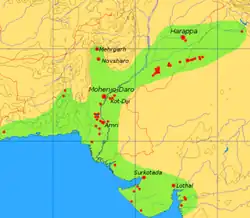 Extent and major sites of the Indus Valley Civilization of ancient India (from History of cities)
 -
 The Round city of Baghdad, the capital of Iraq (from History of cities)
 -
 Cain founding the city of Enoch (from History of cities)
 -
 Constantinople, the largest and wealthiest city in Europe from the 9th through the 12th century (from History of cities)
 -
 Excavated foundations of Çatalhöyük, Turkey. An Anatolian town dated to 7000 BCE. (from History of cities)
 -
.jpg) Daily life of people from the Song period at the capital, Bianjing, today's Kaifeng (from History of cities)
Daily life of people from the Song period at the capital, Bianjing, today's Kaifeng (from History of cities) -
_LACMA_M.2008.40.98.8.jpg)
Topics

List articles
Subcategories

Associated Wikimedia
The following Wikimedia Foundation sister projects provide more on this subject:
-
 Commons
Free media repository -
 Wikibooks
Free textbooks and manuals -
 Wikidata
Free knowledge base -
 Wikinews
Free-content news -
 Wikiquote
Collection of quotations -
 Wikisource
Free-content library -
 Wikiversity
Free learning tools -
 Wiktionary
Dictionary and thesaurus
-
 List of all portals
 -

-

-

-

-

-

-

-

-

-
 Random portal
 -
 WikiProject Portals